To export shea butter, you need three things a buyer can check: a product that meets a named standard (usually the Codex regional standard for unrefined shea butter or a national standard based on it), the certificates your buyer's market requires (organic, fair trade, food safety), and a supply of well-dried kernels you can trace back to collectors. "Grade A" on its own proves nothing; a laboratory report on free fatty acids, peroxide value and moisture does. Policy is also moving in your favour: Ghana and Nigeria have both acted to restrict raw shea nut exports so more of the crop leaves as butter.
This guide is written for producers, cooperatives and exporters. If you are on the buying side, read our companion guide, buying cashew, sesame and shea from Africa, which covers seasons, kernel checks and buyer pitfalls.
The market you are selling into
Shea trees grow wild across a belt from Senegal to South Sudan and are protected on farmland rather than planted. An estimated 16 million women collect and process the fruit, and the shea butter industry has grown by more than 600% over the last 20 years, driven largely by its use as a cocoa butter substitute in food since the early 2000s (The Conversation, via AllAfrica, January 2026).
That gives you two very different customer groups:
| Buyer type |
What they buy |
What they care about |
| Food and confectionery fat processors |
Kernels or crude butter in bulk, for refining and fractionation |
Volume, consistent FFA, contaminants, traceability, price |
| Cosmetics brands and ingredient distributors |
Unrefined or refined butter, often certified |
Colour, odour, purity, organic or fair-trade status, story |
| Small-batch and artisanal brands |
Unrefined butter in smaller lots |
Authenticity, certification, packaging, small minimum orders |
Benin, Burkina Faso, Mali and Togo account for 61% of world shea exports, according to Global Shea Alliance figures cited by the Enhanced Integrated Framework, and Burkina Faso and Ghana are leading exporters of dry kernels. The Global Shea Alliance (GSA), a non-profit industry association founded in 2011, brings together producers, processors and brands and promotes quality practices and standards (GSA).
What "Grade A, B and C" actually means
Supplier websites describe shea butter as Grade A (raw or unrefined), B (refined) and C (highly refined, often solvent-extracted). These letters are a trade convention, not a certified grade. One supplier points out that no international body maintains a shea butter grading system and that the letter alone tells a buyer nothing that can be checked (Baraka Shea Butter).
What buyers can check is a specification against a published standard:
| Standard |
Status |
What it covers |
| Codex CXS 325R-2017, Regional Standard for Unrefined Shea Butter (Africa) |
Adopted 2017, amended 2020 (FAO Codex, Africa regional standards) |
Unrefined shea butter for direct consumption or as a food ingredient |
| DEAS 967-1:2022, East African standard for shea butter |
Draft for public comment (Tanzania Bureau of Standards) |
Shea butter for cosmetic use |
| DUS 1635:2016, Uganda shea butter standard |
Draft notified to the WTO (WTO) |
National specification |
The parameters these standards use are the ones your buyer will test:
- Free fatty acids (FFA): the parameter most standards use to separate grades, and the one buyers watch most closely.
- Peroxide value: a measure of oxidation, which shows up as rancid odour.
- Moisture and volatile matter: water shortens shelf life.
- Insoluble impurities: dirt and fibre left from processing.
The limits differ between standards. The Uganda draft, for example, sets an FFA maximum of 0.5 and a peroxide value maximum of 5, while the East African cosmetic draft lists a moisture maximum of 0.2% and a peroxide value maximum of 10 mEq/kg for its pure grade. Pick one standard, state it on your specification sheet, and have each batch tested by an accredited laboratory. Checked 17 November 2026.
Getting quality right starts with kernels
Most quality problems in shea butter start before extraction. Fruit falls during the rainy season, and in Ghana August is typically the middle of the nut season (Tridge). Collectors either sell dried kernels or process them into butter themselves (The Conversation).
For an exporter, that means:
- Train and pay for drying. Set a moisture standard for kernels you buy and pay a premium for kernels that meet it.
- Store dry and off the ground, and record storage conditions for each lot.
- Keep lots separate. Traceability for organic and fair-trade buyers depends on knowing which group supplied which lot.
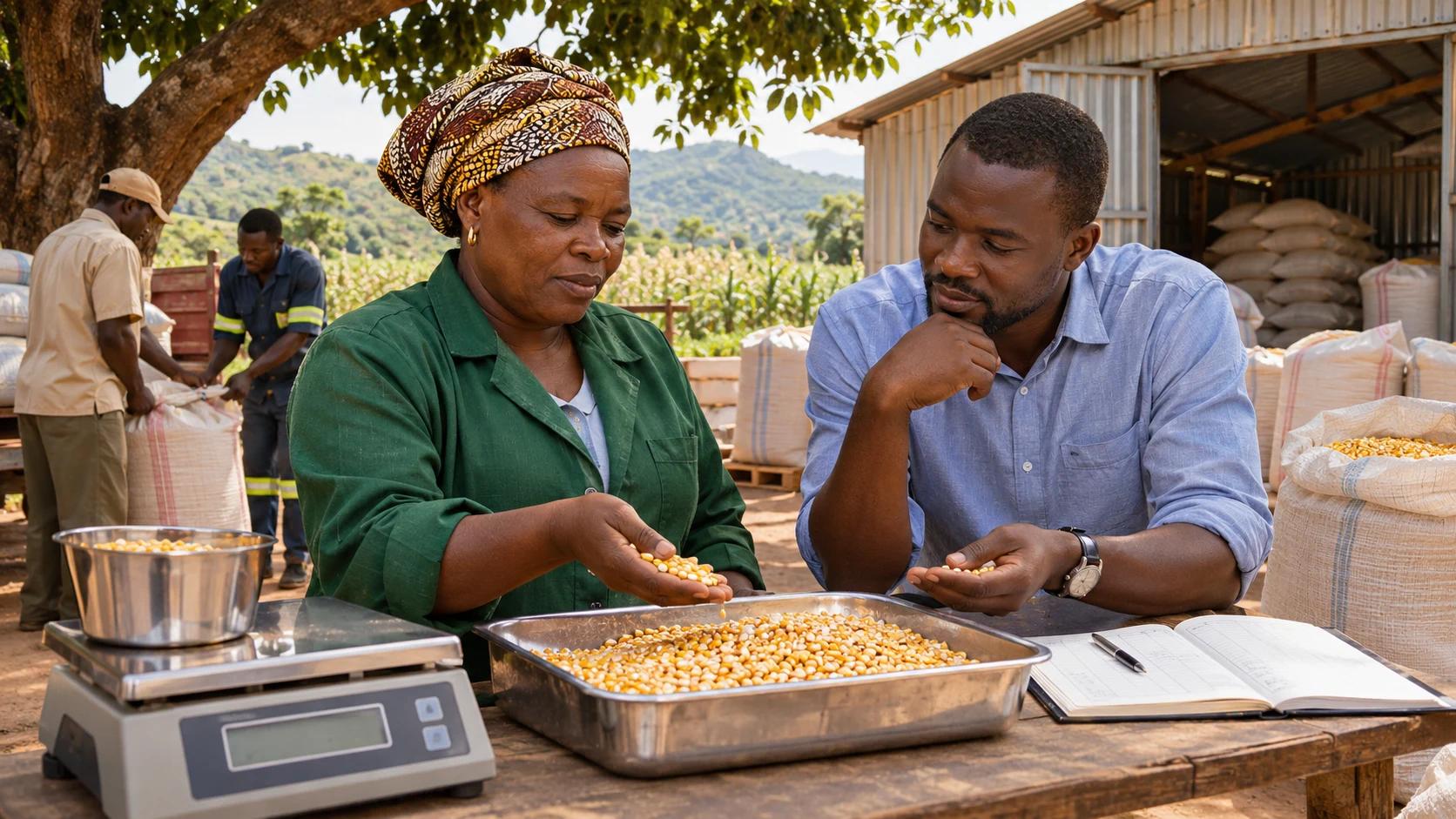
- Test incoming kernels, not just outgoing butter. Rejecting bad kernels is cheaper than refining bad butter.
Certification: which ones buyers ask for
| Certification |
Who asks for it |
What it involves |
| EU organic |
Cosmetics and food brands selling organic in the EU |
Certification under Regulation (EU) 2018/848 by a control body the EU recognises for your country; each shipment travels with an electronic certificate of inspection |
| USDA Organic |
Brands selling organic in the US |
Certification by a certifier accredited under the USDA National Organic Program |
| Fairtrade |
Brands with fair-trade claims, mainly cosmetics |
Certification of a producer organisation; Fairtrade has certified shea producer groups in Ghana, Burkina Faso and Côte d'Ivoire (Fairtrade Foundation) |
| Food safety (HACCP-based schemes) |
Food processors and larger cosmetics buyers |
A documented food-safety system at your processing site |
Certification is a cost you recover through price and access, so start with what your target buyers already require. A cooperative that wants to sell to European organic cosmetics brands needs EU organic first. Fair trade matters most to brands that put women's livelihoods in their marketing. Certification has been achievable for Ghanaian producers for a long time: the Akoma cooperative was the first shea producer in Ghana to be Fairtrade certified, in 2009 (Cosmetics Design Europe).
Women's cooperatives and how to structure supply
Shea is collected and often processed by women, which makes cooperatives the natural supply base and a selling point with many buyers. It also brings risks that buyers will ask you about:
- Income and pricing. Research published in January 2026 found average annual shea income of about US$174 (purchasing power parity) among surveyed collectors in Burkina Faso and Ghana, with only 48.7% reporting income gains over ten years (The Conversation). Buyers with fair-trade claims will want to see how your price reaches collectors.
- Competition for nuts. Over 85% of surveyed collectors reported more collectors in their community than ten years earlier, and over 55% said access to private fields had become more restricted (same source). Secure supply through advance agreements and fair, prompt payment.
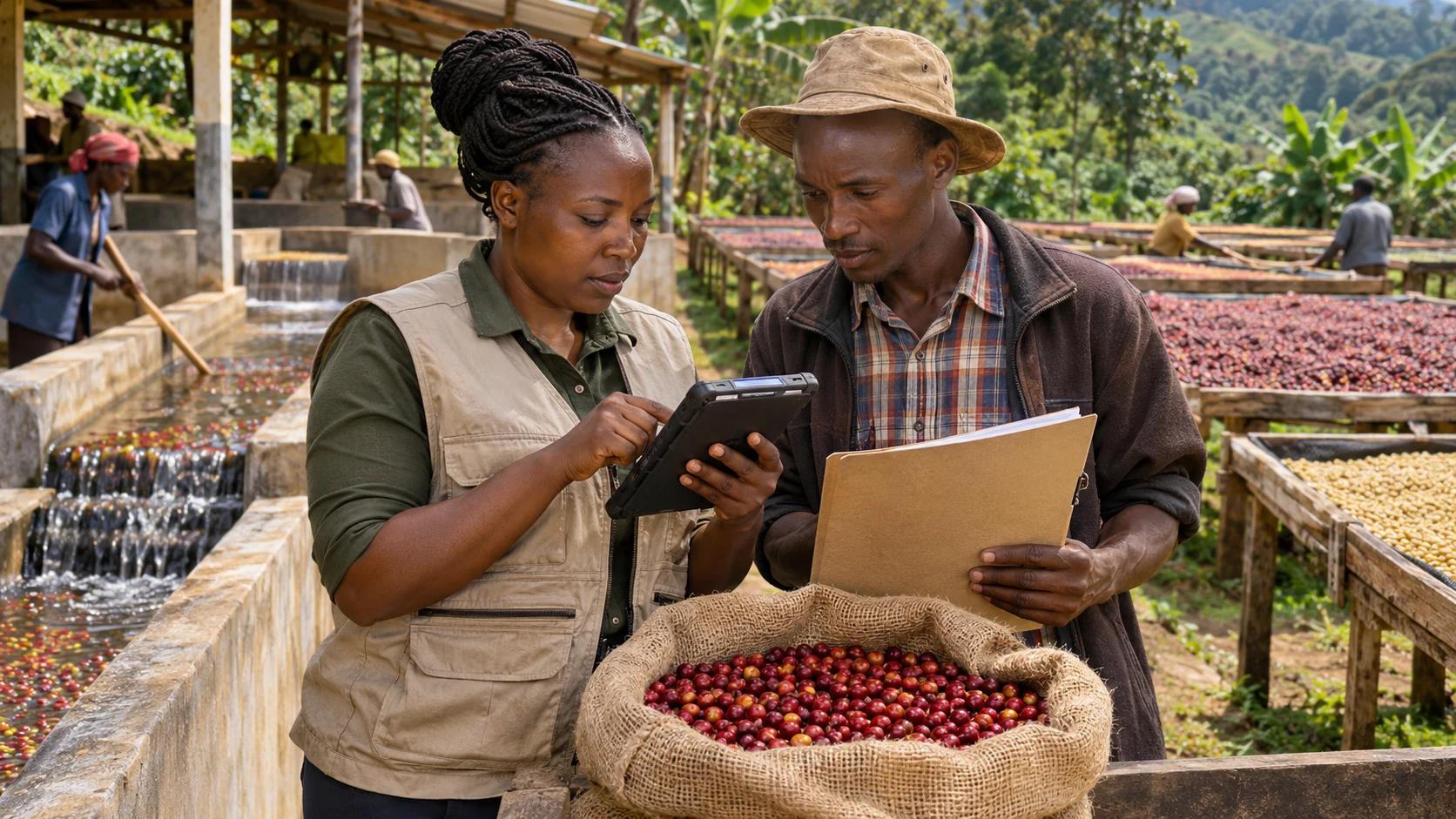
- Records. Keep a member register, purchase records by member and lot, and payment receipts. They are the evidence for certification audits and buyer due diligence.
Export policy: the shift from nuts to butter
Governments in the shea belt want more value added at home:
- Nigeria imposed a six-month ban on raw shea nut exports in August 2025. Local processing could not absorb the harvest, nut prices fell and collectors' incomes dropped by more than half (BBC, via MyJoyOnline).
- Ghana's president announced in February 2026 that the government would ban raw shea, cashew and rubber exports (B&FT). In September 2026 the Tree Crops Development Authority was reported to be tightening controls on unprocessed shea exports (B&FT). Check the current permit and levy rules with the TCDA before you contract a kernel shipment.
For processors, this is an opening: buyers who used to import kernels will need butter. The Nigerian experience is also a warning. If processing capacity and working capital are not in place, a restriction can cut collectors' incomes rather than raise them.
Documents and classification
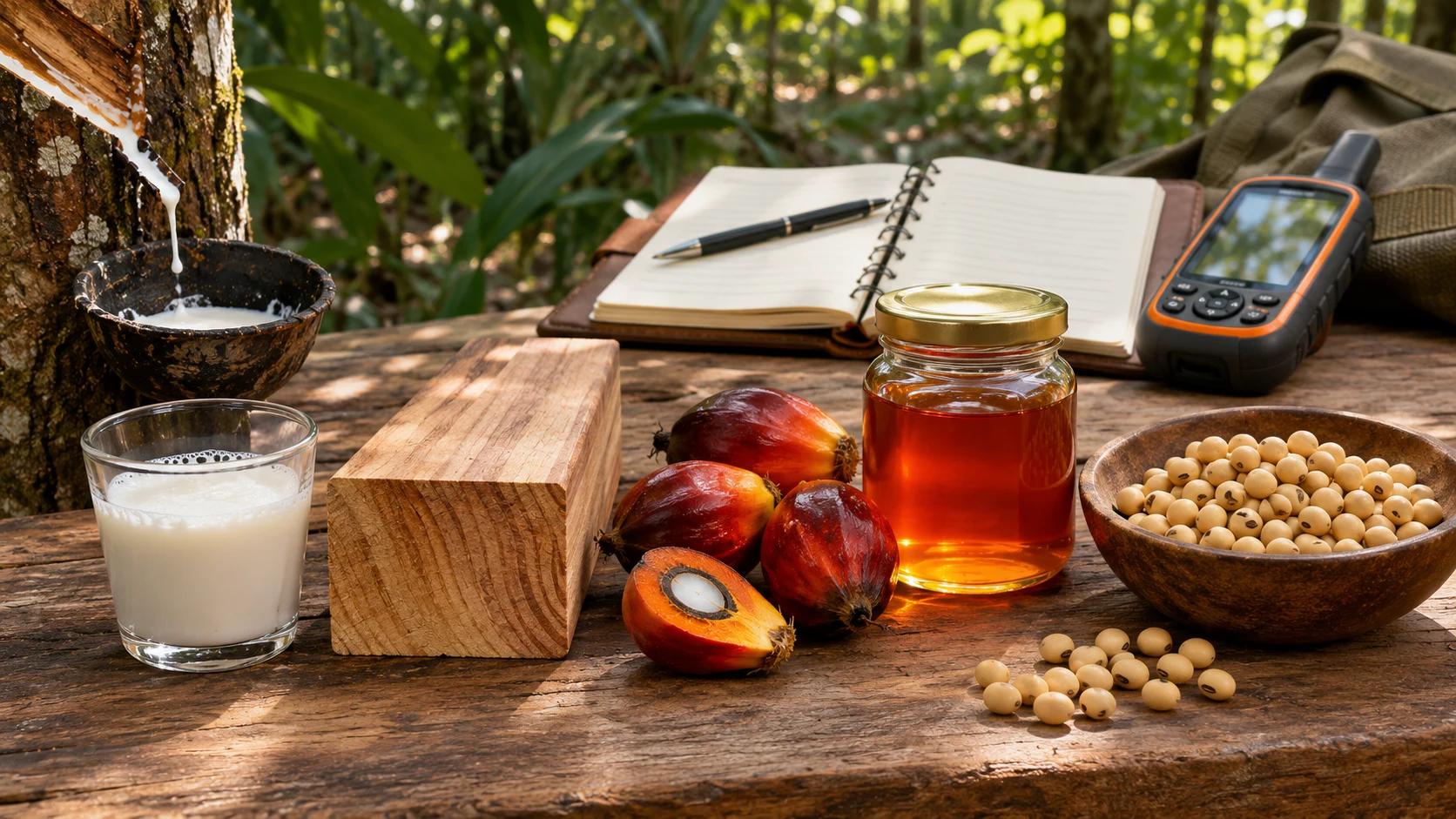
A typical shea butter export file includes a commercial invoice, packing list, certificate of origin, certificate of analysis for the batch, and any organic or fair-trade certificates. Food-grade shipments may also need a health certificate from the national food authority. Our export documentation checklist lists each document and who issues it, and our guide to HS codes explains how to classify kernels and butter correctly. Shea is not one of the commodities covered by the EU Deforestation Regulation, which applies to cattle, cocoa, coffee, oil palm, rubber, soya and wood (our EUDR guide).
Your first export: a practical sequence
- Choose your buyer type. Bulk food processors, cosmetics brands, or small-batch brands. Each wants a different product and volume.
- Write a specification sheet. Name the standard, the FFA, peroxide value, moisture and impurity limits, colour and odour, packaging and shelf life.
- Test three consecutive batches at an accredited laboratory, so you can show consistency, not one good result.
- Get the certification your buyer type requires, starting with the one most of your target buyers ask for.
- Prepare samples and documents. Send a labelled sample with its certificate of analysis and your specification sheet.
- Quote clearly. Price per kilogram or tonne, Incoterm, packaging, minimum order, lead time and payment terms.
- Plan supply before you sign. Know how many tonnes of kernels you can secure at the quality you promised.
What buyers will check about you
Expect a serious buyer to ask for your company registration, export licence where required, laboratory reports, certificates, a plant visit or photos of your processing site, and trade references. Have them ready before you send your first sample.
AfroSynergy connects international buyers with African exporters. Listings open on 15 January 2027. To source a product or find a counterparty now, send us an enquiry.