A cocoa exporter in Kumasi ships to Antwerp. From 30 December 2026, the importer in Antwerp needs one thing before the beans can clear: a set of coordinates for every farm the beans came from. They also need proof that none of that land was forest at the end of 2020.
The EU puts the legal duty on the importer, but the exporter is the one holding the data. If you can't hand it over, the importer can't legally sell your cocoa in Europe, and they'll buy from someone who can.
This guide covers what the EU Deforestation Regulation (EUDR) requires, which parts of the work land on African exporters, and what to have ready before your next EU contract.
The short version
- What it is: Regulation (EU) 2023/1115, amended by Regulation (EU) 2025/2650. It bans products linked to deforestation from the EU market, and it covers exports out of the EU too.
- When it applies: 30 December 2026 for large and medium companies. 30 June 2027 for micro and small companies.
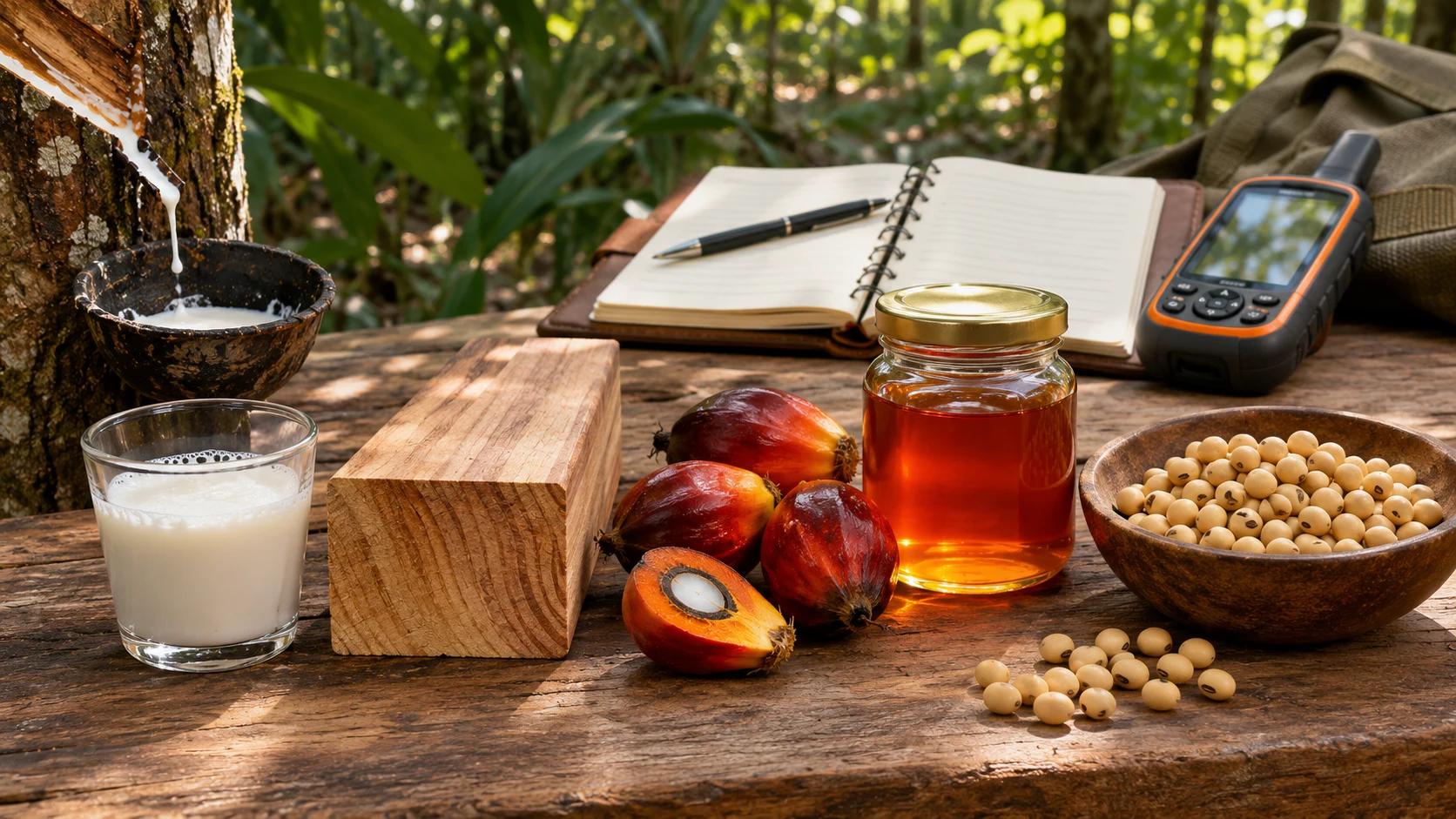
- What it covers: cattle, cocoa, coffee, oil palm, rubber, soya and wood, plus products made from them, such as chocolate, beef, furniture, paper and tyres. A delegated act adopted in July 2026 (Regulation (EU) 2026/2102) took cattle hides, skins and leather out of scope, and adds soluble coffee and some palm-oil derivatives from 30 December 2027.
- What must be true: the product was produced on land that wasn't deforested after 31 December 2020, and it was produced legally under the laws of the country of production.
- What must be proven: the geolocation of every plot of land where the commodity was produced, backed by a due diligence process. The EU company placing the goods on the market files a statement in the EU's information system.
The deadline has moved twice. Plan on 30 December 2026
The regulation was due to apply in December 2024. It was pushed back a year, and then pushed back again by Regulation 2025/2650, published in December 2025. The current dates are:
| Who |
Applies from |
| Large and medium operators and traders |
30 December 2026 |
| Micro and small enterprises |
30 June 2027 (but 30 December 2026 for wood products already covered by the old EU Timber Regulation) |
The Commission completed its simplification review in May 2026. It updated the guidance and FAQs but proposed no further change to the dates. The product list did change: the July 2026 delegated act removed leather, re-treaded tyres and some rubber articles, and added soluble coffee and some palm-oil derivatives from 30 December 2027. As of this writing, no new postponement is before the EU institutions.
Some outdated guides, and some vendor sites, still quote December 2025. Ignore them. What counts is the date the goods are placed on the EU market, not the harvest date. Any lot that clears after 30 December 2026 is covered, which in practice includes much of the 2026/27 cocoa main crop. Contracts signed now for delivery after December 2026 already fall under the rule.
Who is legally responsible, and why it's still your problem
EUDR places obligations on two kinds of company:
- Operators place a product on the EU market for the first time, or export it from the EU. For an African export, that is usually the EU importer.
- Traders sell the product further down the supply chain inside the EU.
An exporter in Ghana, Côte d'Ivoire or Ethiopia that sells to an EU importer is not usually an "operator" under the regulation. You won't file anything in Brussels. But the operator can only file a valid due diligence statement with information that comes from you. Expect it to show up in your contracts as:
- A data clause requiring plot geolocation and production dates for each lot.
- A warranty that the goods are deforestation-free and legally produced.
- A right to audit, or to reject the shipment, if the data fails a check.
The 2025 amendment reduced the paperwork inside the EU: downstream operators and traders no longer file their own statements and just keep the reference numbers. It did not reduce what has to be known about the farm. The data requirement at origin is unchanged.
What you must be able to prove
1. Where it was grown: plot geolocation
Every plot of land that produced the commodity must be geolocated:
- Plots of 4 hectares or less: a single GPS point (latitude and longitude) is enough.
- Plots over 4 hectares (commodities other than cattle): a polygon, meaning enough GPS points to describe the plot's boundary.
- Cattle: the geolocation of every establishment where the animals were kept.
Most cocoa and coffee in West and East Africa comes from smallholders on 2 to 4 hectares. A single point per farm covers many of them. The hard part is coverage. A buyer needs a point for every farm in the lot, not a sample.
The usual format is GeoJSON. Collect coordinates with at least six decimal places, and map the farm itself, not the farmer's house.
2. That the land wasn't forest after 2020
The regulation defines deforestation as converting forest to agricultural use after 31 December 2020. In practice, buyers check your coordinates against satellite forest-cover maps. If a plot shows forest loss after 2020, the lot fails, even if the farmer did nothing wrong.
Two consequences for exporters:
- Run the check before the buyer does. Several public and commercial tools compare plot coordinates against forest-loss layers. A flagged plot found in June is a sourcing decision. Found at the port in January, it is a rejected container.
- Keep the evidence. Records must be kept for five years. If an EU authority questions a shipment in 2029, the importer will come back to you.
3. That it was produced legally
"Legal" means compliant with the laws of the country of production that apply to the land: land-use rights, environmental rules, labour and human rights, tax, anti-corruption, and the free, prior and informed consent of affected communities where national law requires it. For most exporters this means having land-tenure or farm-registration records, cooperative membership lists, and any permits that apply to the commodity.
4. That the lot wasn't mixed with unknown product
Product from verified plots can be combined with product from other verified plots. It cannot be mixed with product of unknown origin. The Commission's guidance does not accept a "mass balance" approach, where compliant volume is credited against a mixed pool, as EUDR compliance.
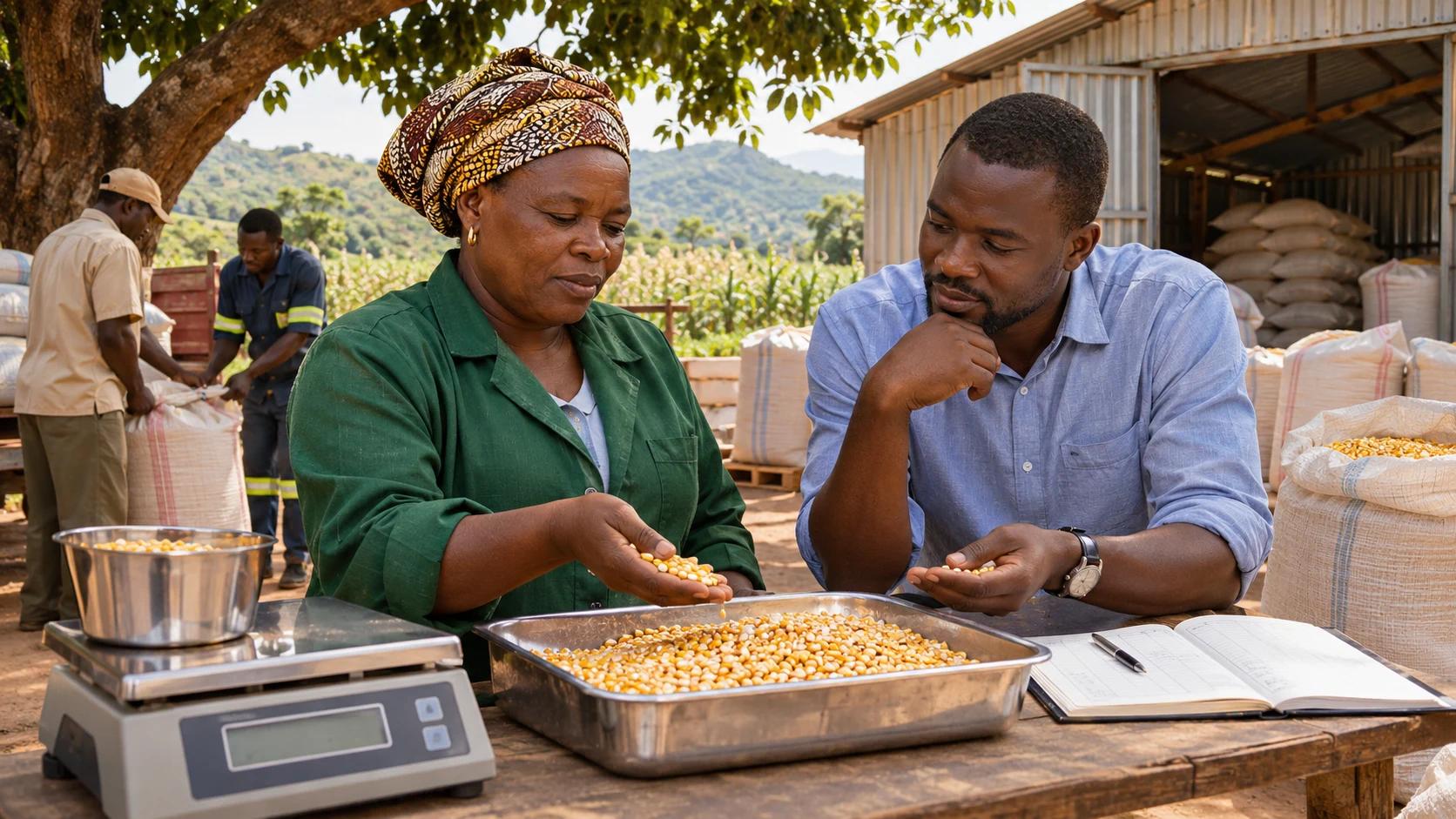
For aggregators and licensed buying companies, this is the biggest operational change. Segregation now has to run from the farm gate to the container.
Country risk: why your country's rating matters
The Commission sorts producing countries into three risk tiers: low, standard and high. The tier changes two things:
|
Low risk |
Standard risk |
High risk |
| Share of operators checked by EU authorities each year |
1% |
3% |
9% |
| Due diligence |
Simplified: collect the information, no risk assessment or mitigation needed |
Full |
Full |
Countries not named on the list default to standard risk. According to IISD's analysis of the first list (May 2025), Ghana, Rwanda, Kenya, Gabon, the Republic of Congo, South Africa and Burundi were rated low risk, while Côte d'Ivoire, Cameroon, Ethiopia and Uganda were rated standard. Check the Commission's current list before relying on a rating. The list is due for review, and a change of tier changes how much your buyer has to do.
Even low risk doesn't mean "no data". Geolocation is still required. What gets simpler is the buyer's risk assessment, so it's cheaper to buy from you, and that is a selling point worth raising in negotiations.
Small producers: the simplified declaration
The 2025 amendment added a one-time simplified declaration for micro and small primary operators established in low-risk countries. These are producers who place their own product on the EU market. Instead of a statement per shipment, they file once and get an identifier that travels with their products.
This helps a farmer-owned cooperative in a low-risk country that sells directly into the EU. It does not apply to most African exporters, who sell to an EU importer rather than placing goods on the EU market themselves. Don't assume it exempts you.
Commodity by commodity: where African exporters are exposed
| Commodity |
Main African origins |
Where EUDR bites hardest |
| Cocoa |
Côte d'Ivoire, Ghana, Nigeria, Cameroon |
Millions of smallholders, and beans pass through many hands between farm and port. Mixing at the buying-company level is the main risk. |
| Coffee |
Ethiopia, Uganda, Kenya, Tanzania, Rwanda |
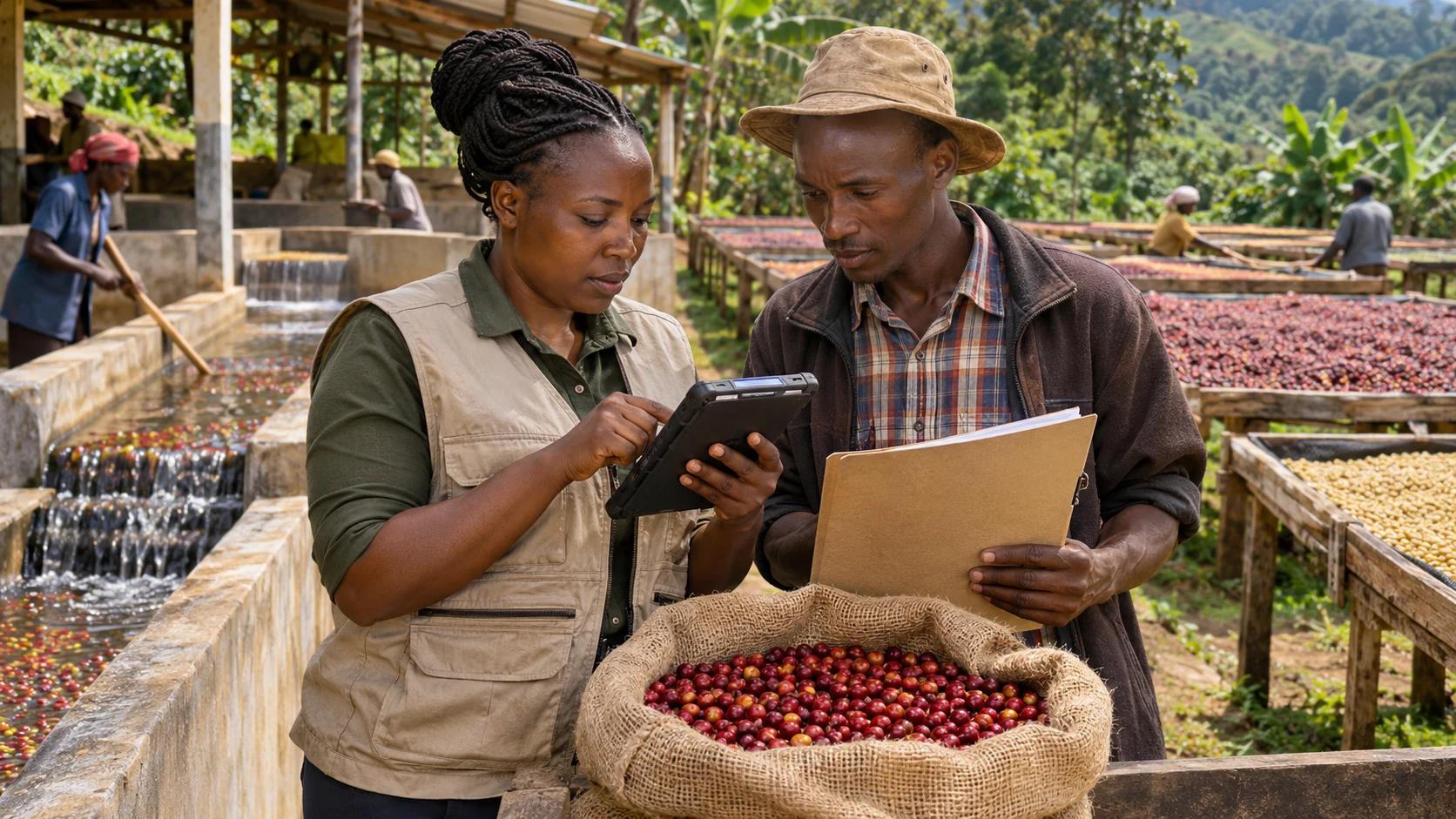
Auction and washing-station systems pool cherries from many farms. Traceability has to survive the washing station. |
| Rubber |
Côte d'Ivoire, Liberia, Nigeria, Cameroon |
Smallholder latex collected by middlemen; plantation concessions need polygons. |
| Oil palm |
Nigeria, Côte d'Ivoire, Ghana, Cameroon |
Small volume to the EU, but derived products such as oils and fats are covered. |
| Wood |
Cameroon, Gabon, Republic of Congo, DRC |
Legality evidence (concessions, permits) gets the closest scrutiny. |
| Cattle (beef) |
Botswana, Namibia, Kenya, Ethiopia |
Pastoral systems: every establishment where the animals were kept must be geolocated. Hides and leather left the scope in 2026. |
| Soya |
Zambia, Nigeria, South Africa |
Smaller EU exposure, but the rules are the same. |
Rubber, wood, oil palm and soya are covered one by one in EUDR for rubber, timber, palm oil and soy from Africa. For commodity context, see the EUDR overview and the sector pages. For why plot data shifts bargaining power toward producers, read Made in Africa, Sold by Other People.
A 90-day preparation plan for exporters
Days 1–30: map what you have
- List every farm, cooperative or collection point that supplies you. Note which ones already have GPS data, and in what format.
- Check your country's tier on the Commission's benchmarking list.
- Ask your EU buyers, in writing, what data format and delivery timing they will require from December 2026.
Days 31–60: fill the gaps
- Collect GPS points or polygons for every supplying plot. Budget for field staff. This is the expensive part.
- Run every plot against post-2020 forest-loss maps, and decide what to do about flagged plots before harvest.
- Gather legality documents: farm registration, cooperative records, any permits.
Days 61–90: make it repeatable
- Set up lot-level segregation from collection to container, and record which plots fed each lot.
- Build a standard data pack per shipment: the plot list in GeoJSON, production dates, legality documents and the forest-check result.
- Set up five-year record retention.
An exporter who can send that data pack with the first offer is easier to buy from than one who can't. When EU importers are cutting supplier lists to the ones they can document, that's a commercial advantage, not just compliance.
Common questions
Does AfCFTA or another trade preference exempt my shipment from EUDR?
No. EUDR is a market-access rule and applies whatever the tariff treatment. A shipment can enter duty-free and still be refused for failing EUDR.
Does EUDR apply to exports to the UK, US, China or the Gulf?
No. EUDR covers the EU market only. The UK has its own forest-risk commodity rules under the Environment Act 2021, so check their current status separately. Many multinational buyers apply EUDR-level traceability across all their sourcing anyway.
What happens if a shipment fails?
Penalties fall on the EU operator. They include fines of up to at least 4% of the operator's annual EU turnover, confiscation of the goods, and temporary exclusion from public procurement. The commercial result for the exporter is simpler: the buyer stops buying.
Do I need certification (Rainforest Alliance, Fairtrade, FSC) to comply?
Certification is not compliance. Certification schemes can supply useful data, but the operator still has to carry out EUDR due diligence. A certificate doesn't replace plot geolocation.
This guide is general information, not legal advice. EUDR guidance is still being updated: check dates and country ratings against the European Commission's official pages before making compliance decisions. Last reviewed: 17 November 2026.
AfroSynergy connects international buyers with African exporters. Listings open on 15 January 2027. To source a product or find a counterparty now, send us an enquiry.