A sourcing request that African exporters will answer does six things: it names the product to a grade or specification someone can test, gives a volume and delivery schedule, states the Incoterm and destination port, lists the certificates and documents you need, gives a target price or budget range, and says who you are and when you will decide. A request that does all six can be quoted in a day. A request that says "we need 500 tons of cashew, best price" gets silence, or a reply from someone you should not deal with.
The template below is free to copy. It works for agricultural commodities, processed food and light manufactured goods. Each field has a line on why the exporter needs it.
Why most requests go unanswered
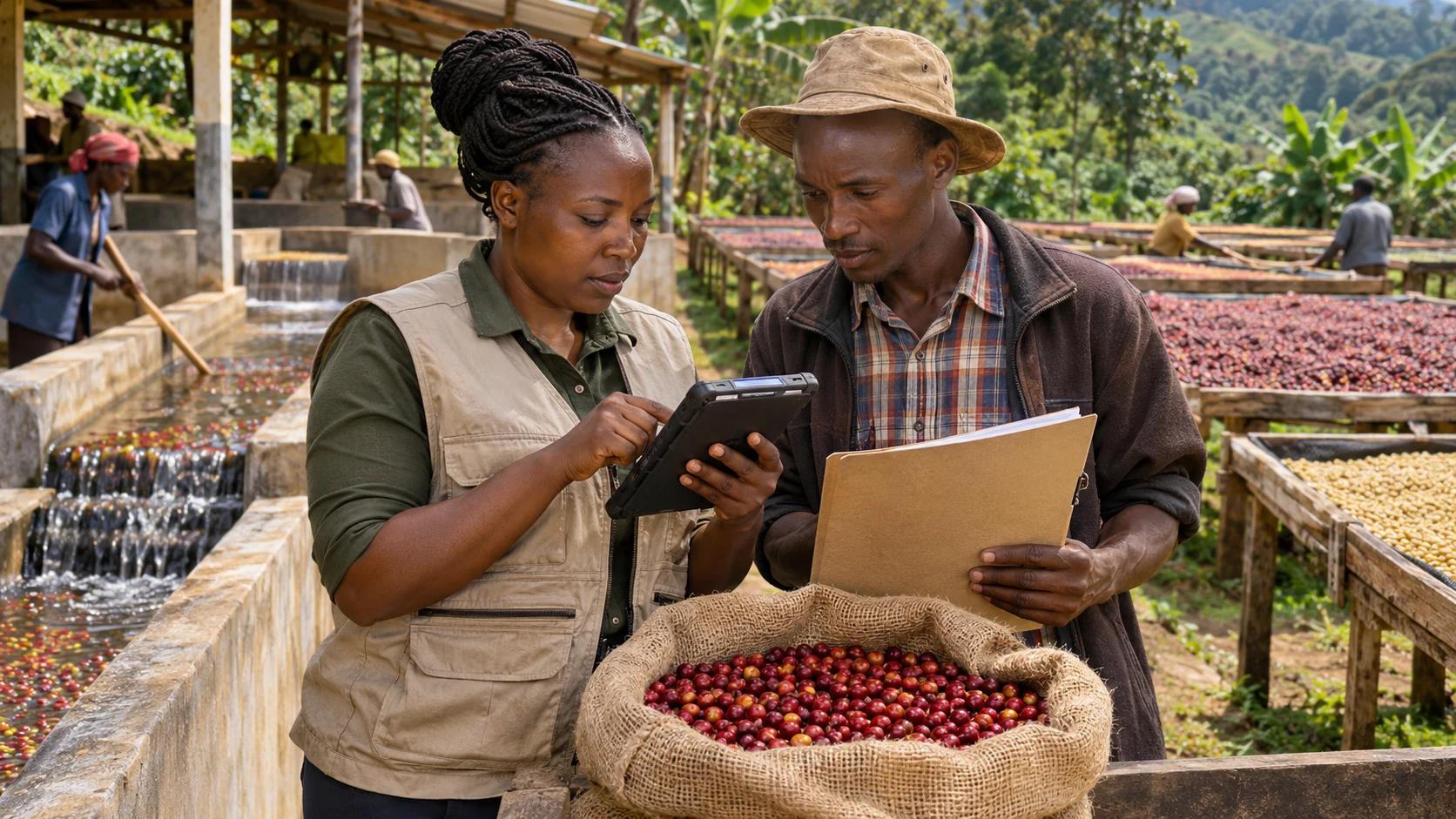
Look at it from the exporter's side. A cooperative manager in Ghana or a sesame trader in Nigeria receives requests from buyers they have never heard of, by email, WhatsApp and trade platforms. Many are vague. Some are fishing for price data. A few are fraud attempts, and exporters have learned to spot them.
A good exporter rations time. They answer the requests they can price and that look like real business. Pricing needs a specification, a volume, a delivery point and a payment structure. "Real business" is signalled by a buyer who identifies themselves, knows the trade terms and has a timeline. A request missing those signals drops down the pile.
The fix is not a longer email. It is a structured one.
The six things every request must contain
1. A specification someone can test
"Grade A" means different things in different trades and countries. Write the specification as measurable parameters, the way a lab or inspector would check them:
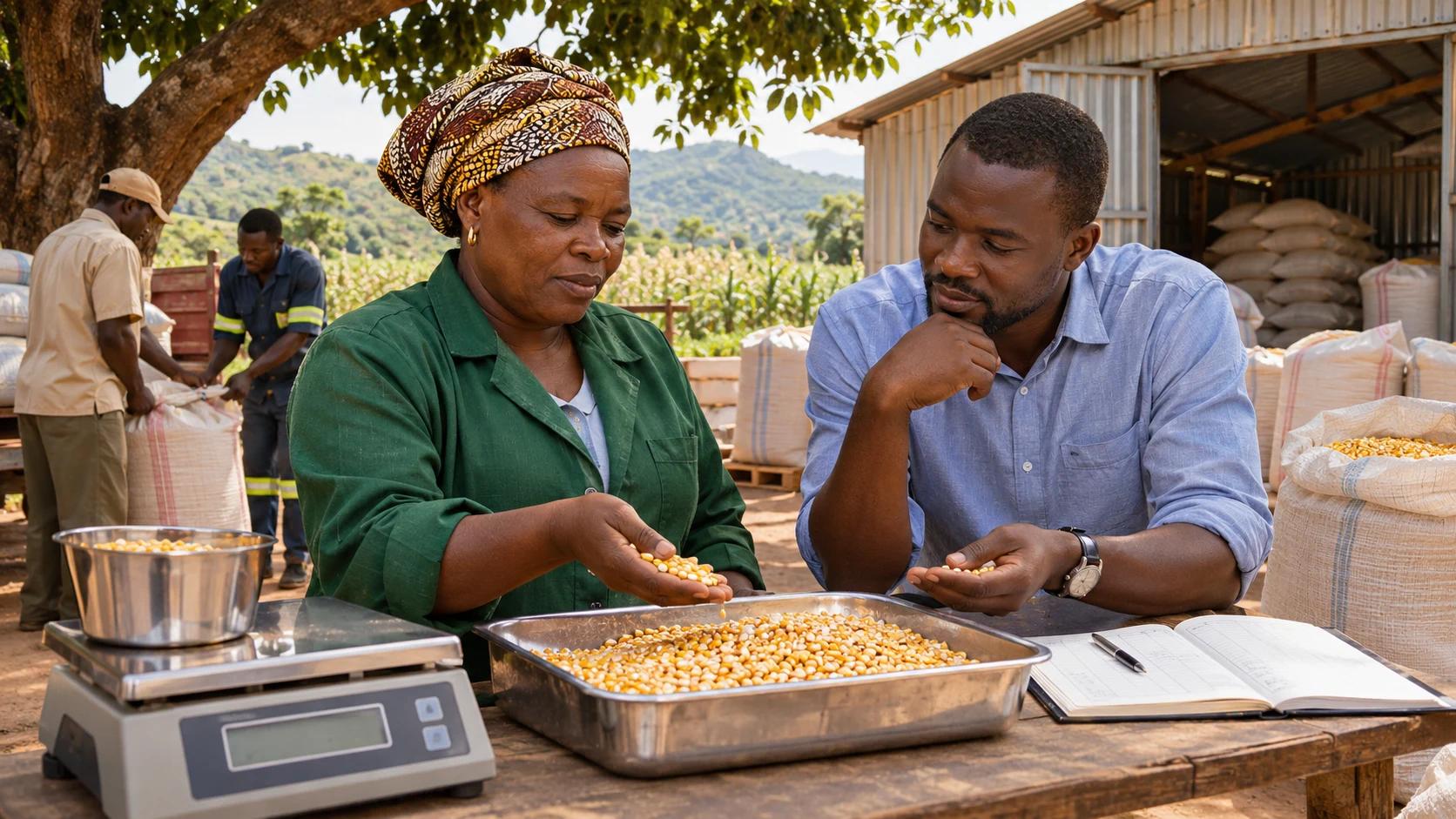
- Agricultural commodities: moisture content, foreign matter, defect counts, size or count per kilo, and for crops prone to it, a maximum aflatoxin level. Name the grading standard if the trade has one.
- Processed food: recipe or ingredient list, pack size, packaging material, shelf life required at arrival, and labelling language. For own-label products, see private label food products made in Africa.
- Manufactured goods: material composition, dimensions and tolerances, colour references, a tech pack or drawing, and the quality level you will inspect to.
For manufactured goods, say how you will judge quality on arrival. Many buyers inspect to an acceptance quality limit (AQL) under ISO 2859-1, whose third edition was published in 2026. Naming the AQL up front tells the exporter how strict the check will be before they price it.
Add the HS code if you know it. The Harmonized System, maintained by the World Customs Organization, is what both customs authorities will use, and agreeing it early prevents a mismatch on the documents.
2. Volume, split into shipments
Give the total quantity, the size of each shipment (a 20-foot or 40-foot container is the natural unit for most goods), the number of shipments and the frequency. Say whether the first order is a trial.
Exporters price differently for one trial container and a twelve-month programme. Seasonal crops have a harvest window, so a buyer who wants product in the wrong months needs to know early that it will come from storage or not at all.
3. Incoterm and named place
State the Incoterm and the place it applies to. The Incoterms 2020 rules, published by the International Chamber of Commerce and in force since 1 January 2020, are a set of eleven three-letter terms that split costs, risk and paperwork between buyer and seller. "FOB Tema" and "CIF Rotterdam" produce very different prices for the same product.
If you are not sure which to use, ask for two quotes, for example FOB at the African port and CIF at yours. That also shows you what the exporter assumes freight and insurance cost. The deal structure guide compares the common terms from both sides.
4. Certificates and documents
List every certificate and document you will need, and say whether it must exist before the order or can be obtained for it. Common ones:
| Document |
Who usually issues it |
When you need it |
| Certificate of origin |
Chamber of commerce or customs authority in the exporting country |
To claim a tariff preference, or where the destination requires it |
| Phytosanitary certificate |
The exporting country's plant protection authority |
Plants and plant products, most agricultural goods |
| Certificate of analysis |
Accredited laboratory |
Food and commodities with contaminant or quality limits |
| Food safety certification |
Certification body under a scheme such as FSSC 22000 or BRCGS |
Processed food for retail buyers |
| Inspection certificate |
Third-party inspection company |
Where the buyer or destination requires pre-shipment inspection |
| Due diligence data under EUDR |
Exporter supplies plot geolocation; the EU operator files the statement |
Cocoa, coffee, cattle, palm oil, rubber, soy and wood entering the EU |
Many retail buyers ask for food safety certification under a scheme benchmarked by the Global Food Safety Initiative. If your buyer insists on a specific scheme, say so. An exporter certified to one scheme may not be certified to another, and certification takes months.
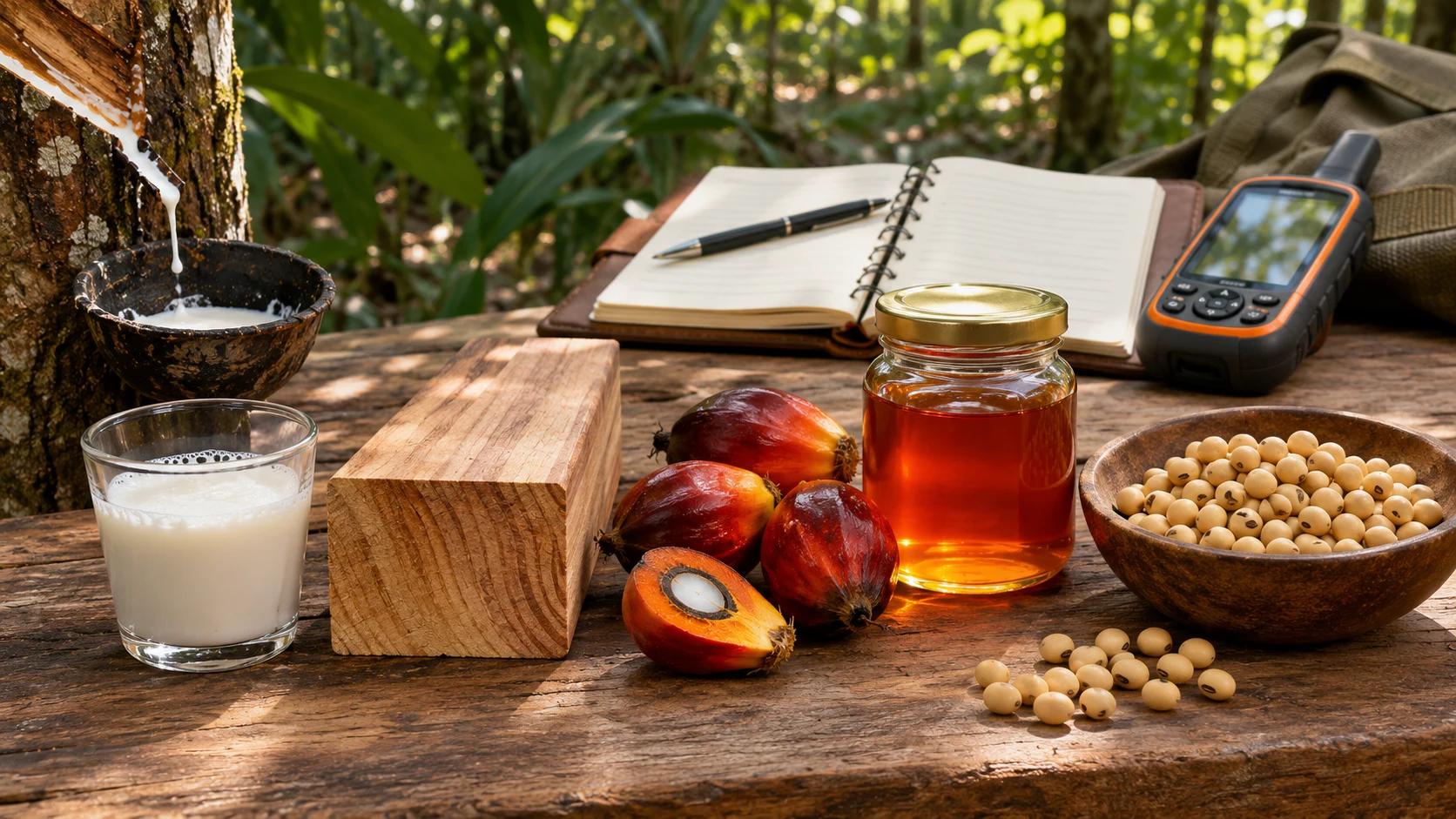
For EUDR commodities, the regulation applies from 30 December 2026 for large and medium operators. The exporter has to be able to supply plot geolocation. See the EUDR guide for African exporters for what you must prove.
Whether you need third-party inspection, and what to put in the purchase order if you do, is covered in the pre-shipment inspection guide.
5. A target price or budget range
Buyers often hold back a target price for fear of anchoring the negotiation. With exporters who don't know you, that backfires. A request without a price signal looks like market research, and serious exporters don't spend time quoting market research.
Give a range, or a target with the basis stated: "Target USD [x] per tonne FOB, based on our current supply." If your target is unrealistic, a good exporter will tell you why. That is useful too.
State your payment terms as well. Letter of credit, documentary collection, deposit with balance against documents, or open account all change the exporter's financing cost and therefore the price. If you propose a letter of credit, say it will be issued under the ICC's UCP 600 rules and by which bank.
6. Who you are and when you will decide
Give your company's legal name, country, registration number, website and a named contact. Say what you do with the product (resell, process, retail) and give your decision date.
This is the field that most separates answered requests from ignored ones. An exporter checking you out does what you would do in reverse. If they can find your company in a public registry and see a real website, your request moves up the pile. For how buyers run the same check on exporters, see how to find and check export suppliers.
The template
Copy this table into an email or document and fill every row. If a row does not apply, write "not applicable" rather than deleting it. A deleted row looks like a field you forgot.
| Field |
What to write |
Illustrative example |
| Buyer |
Legal name, country, registration number, website, contact name and role |
[Company name], [country], reg. no. [x], [website], [name], head of sourcing |
| End use |
Resale, processing, retail private label, industrial input |
Roasting and retail packing |
| Product |
Common name and HS code (6 digits at least) |
Raw cashew nuts in shell, HS 0801.31 |
| Specification |
Measurable parameters and the standard or method used to test them |
Moisture max [x]%, nut count max [x] per kg, outturn min [x] lbs per 80 kg bag |
| Quality check |
How and when you will inspect; AQL for manufactured goods |
Third-party sampling at loading; lab analysis by [lab] |
| Packaging and labelling |
Unit pack, outer pack, palletisation, label language and content |
Jute bags of [x] kg; English labelling |
| Total volume |
Quantity and unit |
[x] tonnes |
| Shipments |
Size, number and frequency; trial or programme |
Trial of one 40-foot container, then [x] per month |
| Delivery window |
First shipment date and seasonal constraints |
First shipment by [month]; current crop only |
| Incoterm and place |
Incoterms 2020 rule and named port or place |
FOB [African port]; also quote CIF [your port] |
| Documents |
Each document required, and whether it must exist already |
Certificate of origin, phytosanitary certificate, certificate of analysis |
| Certification |
Schemes required and whether certification must be current |
[Scheme], current at order |
| Target price |
Range or target, with basis and currency |
USD [x] to [y] per tonne FOB |
| Payment terms |
Method, timing, bank |
[x]% deposit, balance against copy documents |
| Samples |
Number, size, who pays courier |
2 kg pre-shipment sample, courier paid by buyer |
| Decision date |
When you will choose a supplier |
Quotes by [date]; decision by [date] |
The example column is illustrative. Fill in your own figures; the bracketed values are placeholders, not recommendations.
A short checklist before you send
Mistakes that get requests ignored
Asking for "all your products and prices." Exporters read this as data collection. Ask about one product.
Specifying a volume you cannot buy. Some buyers inflate volume to attract attention. Exporters who have seen it before discount the request, and if you do get a quote, it will be for a volume you will not take. Ask for the volume you will actually order.
Changing the specification after the quote. Every change resets the price. Settle the specification internally first.
Sending the request to dozens of suppliers at once with visible addresses. It tells each recipient they are one of many and that you have not done any screening. Shortlist first, then send individually.
Asking for exclusive terms on a first order. Exclusivity is earned on volume. Asking for it before a trial shipment signals inexperience.
What happens after you send it
A good exporter will reply with questions before a price. That is a good sign. It means they read the specification and want to get the quote right. Expect questions on the specification tolerance, the payment terms and the documents.
When quotes arrive, compare them on the same Incoterm and the same specification. A low price on a looser specification is not a low price.
Before you commit money, check the exporter: company registration, export history, references from other buyers, and a sample or inspection. AfroSynergy does not verify suppliers or hold funds today. The checks are yours to run, and the guides linked above show how.
Send us your requirement
If you are sourcing a product from Africa now, you can send us your requirement using the fields above. If we can help with it, we will come back to you. Listings open on 15 January 2027.
AfroSynergy connects international buyers with African exporters. Listings open on 15 January 2027. To source a product or find a counterparty now, send us an enquiry.