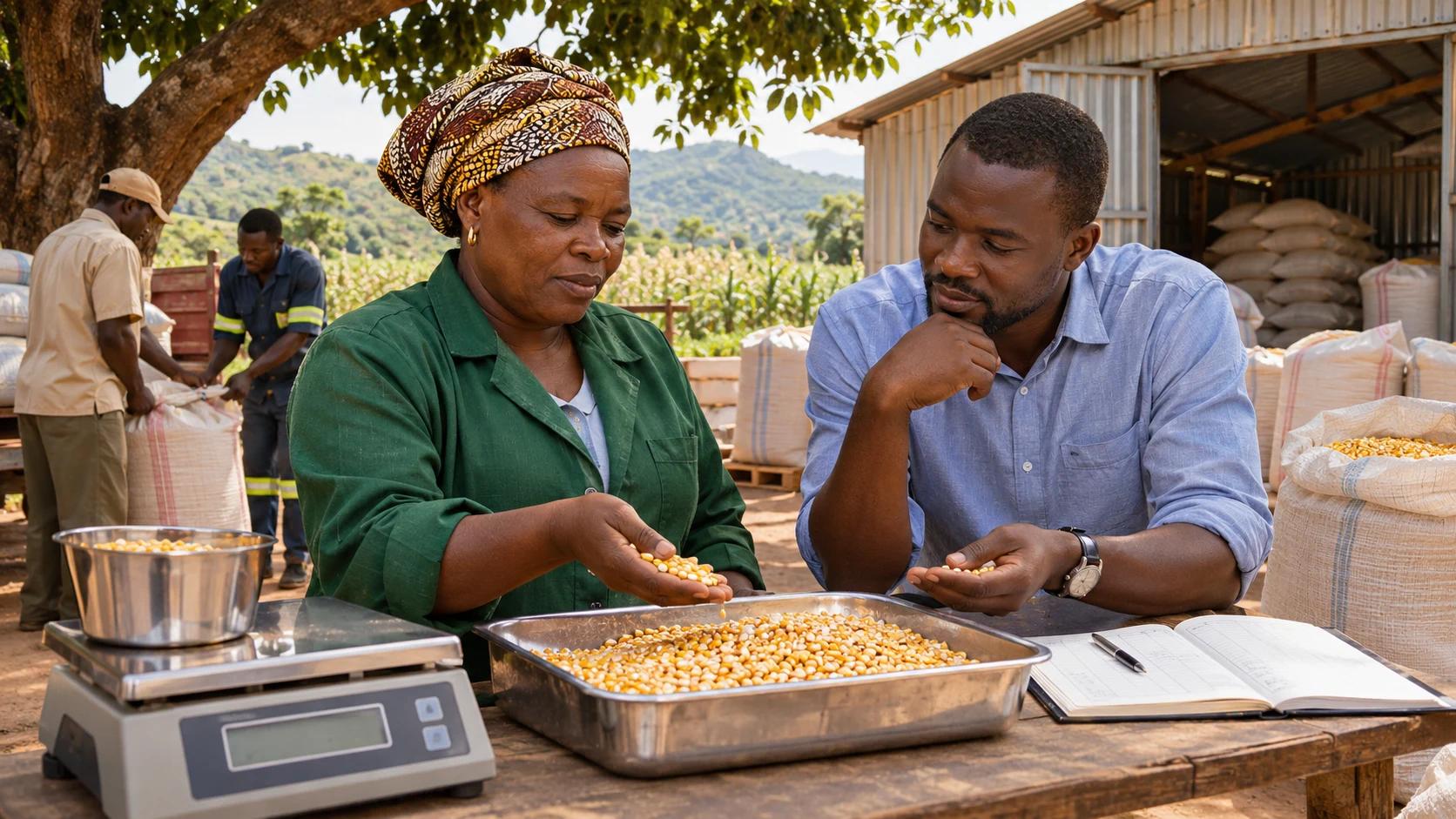
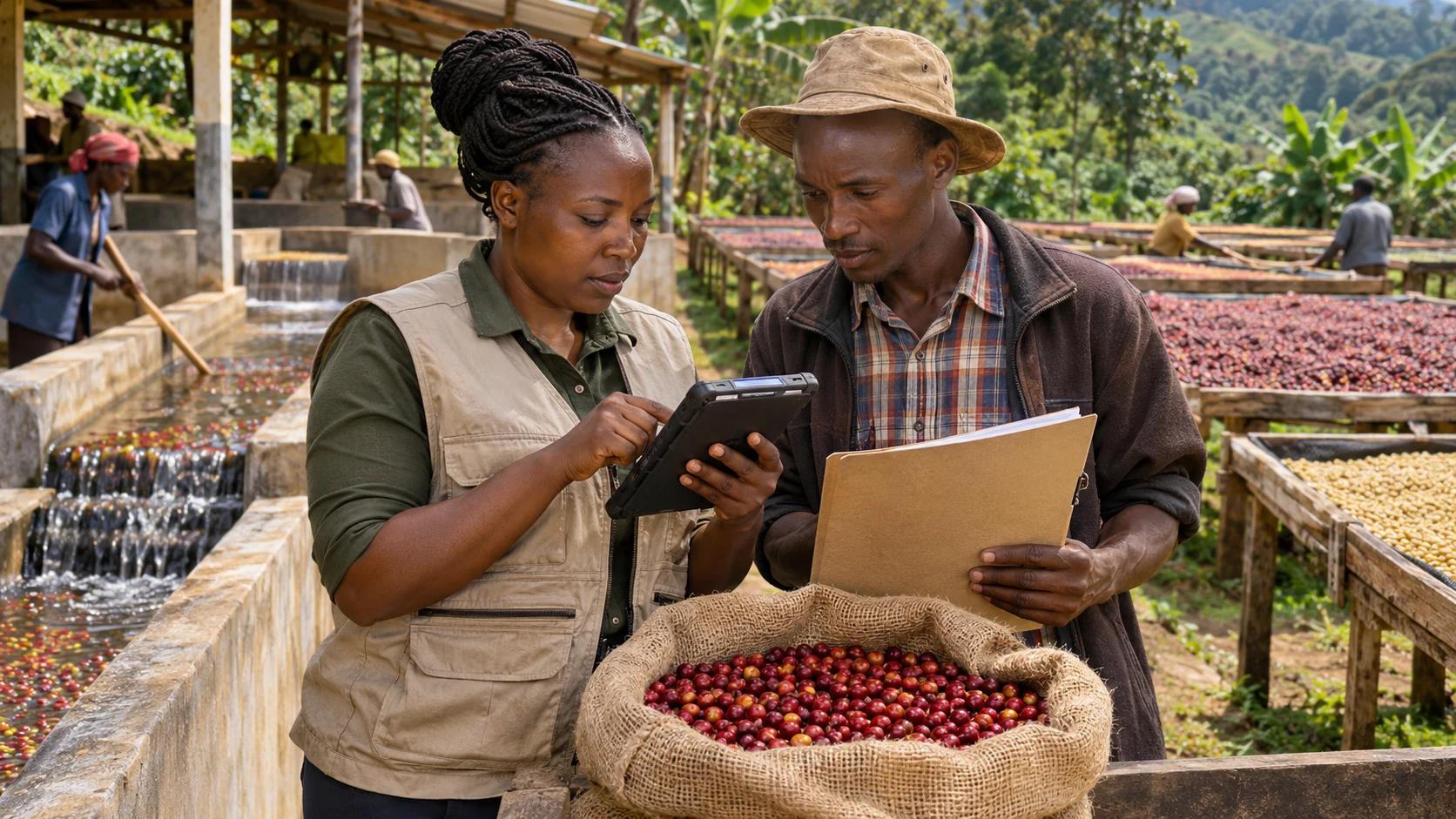
Pre-shipment inspection (PSI) in African trade means one of two things. If you are buying goods from an African exporter, it is an inspection you commission yourself: an independent firm checks quantity, quality and packing before the goods leave, so you are not paying for a container you have never seen. If you are shipping goods into an African country, it usually means a mandatory conformity programme, such as Kenya's PVoC or Nigeria's SONCAP, where an accredited agency must certify the goods before customs will clear them. The first is a commercial choice. The second is a legal condition of entry. Mixing them up is how buyers end up with a certificate that proves nothing about the quality they ordered.
This guide covers both: when an inspection is worth paying for, what to write into your purchase order, how the mandatory regimes work, and the fees that are actually published.
Two kinds of inspection, two different jobs
|
Buyer-commissioned inspection |
Mandatory conformity programme |
| Who requires it |
You, the buyer, through your contract |
The importing country's standards body or customs |
| Typical direction |
Goods leaving Africa for the EU, UK, US, Asia or another African market |
Goods entering an African market such as Kenya or Nigeria |
| What it checks |
Whatever your contract says: quantity, specification, defects, packing, marking, loading |
Conformity with the importing country's technical standards, plus documents |
| Output |
An inspection report, and sometimes a certificate you can present under a letter of credit |
A certificate of conformity (CoC) that customs requires for clearance |
| Who pays |
Normally the buyer, unless the contract says otherwise |
The exporter or importer, depending on the programme and the route |
A certificate of conformity says the goods meet a national standard. It does not say they match your purchase order. If your concern is "did I get the grade, quantity and packing I paid for", you need the first kind, even when the second kind is also required.
How governments regulate PSI
The World Trade Organization has an Agreement on Preshipment Inspection that covers inspection programmes governments impose through private agencies. The WTO describes PSI as using private companies to check price, quantity and quality of goods ordered overseas, mainly to protect against capital flight, fraud and duty evasion. The agreement requires user governments to apply these programmes without discrimination and with transparency, and it sets up an independent review procedure, run with the International Federation of Inspection Agencies and the International Chamber of Commerce, for disputes between an exporter and an inspection agency.
That framework governs the mandatory programmes. Inspections you commission privately are governed by your contract with the inspection company, so the scope is whatever you write down.
When a buyer should commission an inspection
An inspection costs money and adds a few days. It earns its fee when one or more of these are true:
- It is a first order with a new supplier. You have no track record to rely on. The checks in how to find and check export suppliers in Nigeria, Kenya and South Africa tell you whether the company exists; an inspection tells you whether this shipment matches the order.
- You are paying before you can see the goods. Under a deposit-plus-balance structure, the balance should be released against a clean inspection report, not against a bill of lading alone.
- The product varies by lot. Agricultural commodities (moisture, foreign matter, bean count, kernel grade), processed foods, and apparel all vary in ways a photo will not show.
- Your own customer or regulator will test the goods on arrival. Finding a problem at origin costs less than a rejected container at destination.
- Your letter of credit calls for it. If the credit lists an inspection certificate from a named agency as a required document, the agency and the wording on the certificate must match the credit exactly.
It earns less when you have a long, clean history with the supplier, the goods are standardised and low value, or you are buying ex-works and inspecting at collection yourself.
Who does the inspecting
The large international inspection companies all operate across Africa. Examples include SGS, Bureau Veritas, Intertek and Cotecna. Each also acts as an accredited agency for one or more of the mandatory programmes described below. Plenty of smaller and regional firms do commercial inspections too. These names are examples, not endorsements; ask any firm for its accreditation, a sample report, the inspector's location, and how fast it can attend in the producing region you are buying from.
Bulk agricultural commodities have their own grading conventions, which differ by crop and by origin. For how this works in cocoa, see sourcing cocoa from West Africa.
What to write into the purchase order
An inspector can only check what you specify. Vague orders produce vague reports. Put these in the PO or sales contract, and give the same text to the inspection company:
- The specification. Product, grade, dimensions, composition, moisture or other measurable limits, and the test method for each.
- The sampling plan. For manufactured goods, most inspections use ISO 2859-1, the international standard for acceptance sampling by attributes. Its third edition, published in January 2026, replaced the 1999 version. Name the edition, the inspection level, and the acceptance quality limit (AQL) for critical, major and minor defects. Remember that AQL is a sampling rule, not a quality definition: it tells the inspector how many units to pull and how many defects to tolerate, and your specification still defines what counts as a defect.
- Defect definitions. What is critical (unsafe, non-compliant), major (unsellable) and minor. Attach photos or golden samples where possible.
- The inspection stage. Pre-production, during production, final random inspection when at least most of the order is packed, or loading supervision. For bulk commodities, sampling at the warehouse and supervision of container loading and sealing are the usual combination.
- Who pays and who appoints. Normally the buyer appoints and pays, so the inspector reports to you. State it.
- What happens on failure. Re-inspection at the supplier's cost, rework, a price adjustment, or the right to cancel. Without this clause, a failed report is just an argument.
- Laboratory tests, if any. Name the lab or the accreditation required (for example, ISO/IEC 17025) and which parameters are tested.
- Document link. If payment depends on the report, say so, and say what a "clean" report means.
For how inspection fits with Incoterms and payment milestones, see how to structure an import-export deal in Africa.
Several African countries require imports of regulated products to carry a certificate of conformity issued before shipment. Two of the largest examples:
Kenya: PVoC
The Kenya Bureau of Standards runs the Pre-Export Verification of Conformity (PVoC) programme through appointed inspection agencies. SGS, one of those agencies, published the fee table for the 2026–2029 contract cycle in March 2026. It sets fees as a share of the FOB value, by route:
| PVoC route |
Fee (share of FOB) |
Minimum |
Maximum |
| Route A |
0.6% |
US$300 |
US$3,500 |
| Route B |
0.55% |
US$300 |
US$3,500 |
| Route C |
0.5% |
US$300 |
US$3,500 |
Source: SGS, March 2026; checked 17 November 2026. Laboratory testing, licensing, registration, bulk sampling and re-inspection are charged separately. Confirm against KEBS before quoting a customer.
Which route applies depends on the exporter's status with KEBS and the agency, so ask the agency before you price.
Nigeria: SONCAP
The Standards Organisation of Nigeria runs the SONCAP programme. It works in two steps. First, an exporter obtains a Product Certificate (PC) from one of SON's Independent Accredited Firms; the PC is needed to open the Form M that Nigerian importers use. Then, for each shipment, SON issues a SONCAP Certificate (SC) on receipt of the certificate of conformity, and that is the document customs clears against. SON's approved fee schedule from August 2022 lists:
| SONCAP item |
Fee |
| Product Certificate, unregistered (PC1) |
US$500 |
| Product Certificate, registered (PC2) |
US$1,000 |
| Product Certificate, licensed (PC3) |
US$2,000 |
| SONCAP Certificate (per shipment) |
US$350 |
| Amendment of certificate |
US$100 |
Source: SON, August 2022 schedule, the latest on SON's site when checked on 17 November 2026. Test and inspection charges by the accredited firm are on top.
Kenya and Nigeria are not the only African markets with a pre-export conformity requirement, and product scopes are revised. Before quoting a delivered price into any African market, ask the importer or the national standards body whether your product is regulated and which agency covers your origin country. Medicines also need a marketing authorisation from each country's national medicines regulator; see selling medicines into Africa.
What a buyer-commissioned inspection costs
Inspection companies price commercial inspections by inspector-day plus travel, and by test for laboratory work. We have not found a published, independent schedule of these prices for African origins, so we are not quoting a range. Get two written quotes for the same scope, and check that each quote covers travel to the actual facility (a farm-gate warehouse upcountry is not the same as a port city), the sampling plan, any lab tests, and the report turnaround. Put the fee into your landed-cost sheet; the landed-cost walkthrough shows where it sits.
Common mistakes
- Letting the supplier appoint the inspector. The inspector's client is whoever pays and instructs. If that is the seller, the report is the seller's report.
- Relying on a CoC as a quality check. A PVoC or SONCAP certificate shows conformity to a national standard. It does not check your grade, your count or your packing.
- Inspecting before the goods are packed. A final random inspection on a half-finished order cannot sample the whole lot.
- No loading supervision on bulk goods. The sampled lot and the loaded lot should be the same lot. Seal numbers on the report should match the bill of lading.
- No consequence for failure. Write the re-inspection and rejection rules into the contract before the first shipment.
The short version
If you are buying from Africa, commission your own inspection whenever you pay before seeing the goods, and write the specification, sampling plan and failure rule into the PO. If you are selling into Africa, find out early whether your product falls under a mandatory programme such as PVoC or SONCAP, because no certificate means no clearance. If you supply solar equipment, our guide to solar and mini-grid components in Africa covers the duties and quality rules by country. For the full set of papers that travel with a shipment, see the export documentation checklist.
Frequently asked questions
What is the difference between a pre-shipment inspection and a certificate of conformity?
They answer different questions. A buyer-commissioned inspection checks whether the goods match your contract: quantity, specification, defects, packing and loading. A certificate of conformity says the goods meet the importing country's national standard, and customs requires it for clearance. A CoC does not say the goods match your purchase order, so you may need both.
Who pays for a pre-shipment inspection?
Normally the buyer, for an inspection you commission, unless the contract says otherwise. For mandatory conformity programmes, the exporter or importer pays, depending on the programme and the route. Write into your purchase order who appoints and who pays, because the inspector reports to whoever instructs and pays it.
How much does a Kenya PVoC certificate cost?
Between 0.5% and 0.6% of FOB value, with a minimum of US$300 and a maximum of US$3,500, according to the SGS fee table for the 2026 to 2029 cycle, checked 17 November 2026. Route A is 0.6%, Route B 0.55% and Route C 0.5%. Laboratory testing, bulk sampling and re-inspection are charged separately. Confirm against KEBS before quoting a customer.
How much does a SONCAP certificate cost?
US$350 per shipment for the SONCAP Certificate, under SON's August 2022 fee schedule, the latest on SON's site when checked on 17 November 2026. The Product Certificate costs US$500 unregistered, US$1,000 registered or US$2,000 licensed, and an amendment costs US$100. The accredited firm's test and inspection charges are on top.
Which AQL standard do pre-shipment inspections use?
ISO 2859-1, for most inspections of manufactured goods. It is the international standard for acceptance sampling by attributes, and its third edition, published in January 2026, replaced the 1999 version. Name the edition, the inspection level and the AQL for critical, major and minor defects. AQL sets sample size and defect tolerance; your specification still defines a defect.
How much does a pre-shipment inspection cost in Africa?
It depends on inspector-days, travel and laboratory tests, which is how inspection companies price commercial work. We have not found a published, independent price schedule for African origins, so we do not quote a range. Get two written quotes for the same scope, each covering travel to the actual facility, the sampling plan, lab tests and report turnaround.
AfroSynergy connects international buyers with African exporters. Listings open on 15 January 2027. To source a product or find a counterparty now, send us an enquiry.