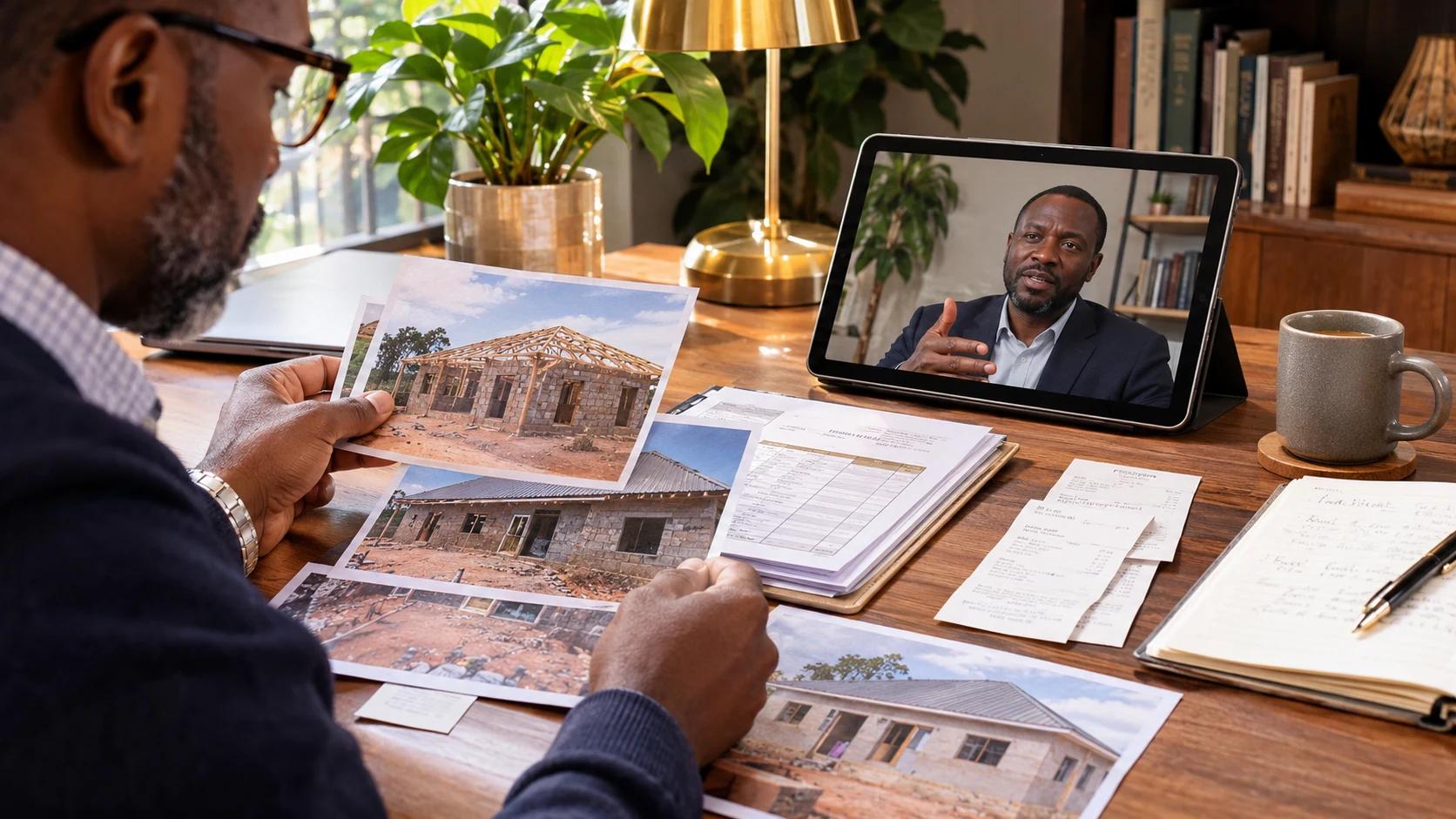
You meet a prospective partner through an old school friend. The conversation is easy. You share references, values and a sense of what the business could be. Within a month you are discussing terms, and you have not asked for a single document you would have demanded from a stranger in London or Houston.
That is the returnee's particular risk. You know the language, the culture and how business works beneath its formal surface. What you do not have is current information. The people who could tell you which contractor delivers, which advisor is worth the fee and who has a history of disputes have moved on, changed roles or been replaced while you were away. The trust networks are as strong as when you left. Your place in them is out of date.
This guide is for diaspora professionals and entrepreneurs moving back to Nigeria, Kenya or Ghana to build a business. Its question: how do you rebuild a current, reliable read on people, and check prospective partners properly without damaging relationships you care about? For the official registry and tax checks themselves, see our verification reference. If you are investing from abroad rather than returning, running due diligence from overseas is the closer fit.
Familiar and current are different things
Cultural fluency is a real advantage. It can also suppress the checks you would make by reflex anywhere else. When the social setting feels familiar, asking for a registration number or calling a reference can feel unnecessary, or even rude. The result can be a partnership with someone whose capability or record does not match how they present.
The fix is to separate two things: how comfortable a relationship feels, and how much you currently know about the person. The second has to be rebuilt deliberately. For the wider pattern, see why diaspora-led African investments fail, and what the data says.
Rebuilding a current read: triangulation
A practical rule: a reputation counts when several people who know someone in different contexts describe them consistently. One enthusiastic referral is a start. Five consistent accounts from people who do not know each other are evidence.
Make the questions easy to answer honestly. Do not ask "Is this person honest?", which puts the other person in an awkward spot. Ask "Tell me about your experience working with them" and "Who else should I talk to?" Then talk to those people.
Your first arrangements should also generate a record of their own. Keep them small, clearly scoped, with defined deliverables and payment points, so that each completed commitment informs the next decision.
Where to meet prospective partners
Alumni networks. University and school networks carry built-in common ground. They reward steady re-engagement. Turning up at the first event in ten years asking for business partners reads as opportunistic. Go without an agenda for a while, and business conversations will follow.
Professional and sector bodies. If you work in a regulated profession or an organized sector, its association is a natural way back into the professional community, and its members answer to that body's standards.
Other returnees. People who came back before you have already learned which service providers are reliable and which arrangements worked. A returnee who refers someone to another returnee is putting their own reputation behind it, and that tends to make referrals more careful.
Your sector's working companies. The firms already doing well what you plan to do are the most informative people to meet, as partners, suppliers or sources of advice.
If a first contact happens online rather than in person, the red flags for a first online meeting with an African business partner apply too.
Checking without offending
The hardest part, returnees often find, is social: asking for documents when the relationship already feels personal. Four approaches help.
- Make it standard, not personal. "My lawyer asks for the same documents from everyone I work with" is true, and it lets both of you go through the process without it reading as distrust. It also sets the expectation that the partnership will run on professional terms.
- Check references through shared contacts. People who know both of you can give context a cold call cannot. Use the triangulation questions above.
- Present documentation as protection for the friendship. "Let's write this down so that if we ever disagree, we have something we both agreed to" is honest and usually well received.
- Put the test in the deal structure. "Let's start with a 90-day pilot with clear deliverables, then formalize the longer partnership" lets real performance do the evaluating.
Country checks
Nigeria
- Company, owners and tax: search the Corporate Affairs Commission register and its persons-with-significant-control register, and confirm a current Tax Clearance Certificate with the issuer; the steps are in our registry guide.
- Professionals: confirm call to the bar, accounting qualifications or engineering registration with the relevant professional body.
- Money: the bank account name must match the registered business or the individual you contracted with.
Kenya
- Company, owners and tax: run an official search with the Business Registration Service, ask the company for its own beneficial ownership register, and check its Tax Compliance Certificate on iTax; the steps are in our registry guide.
- Professionals: confirm membership with the relevant professional body directly.
Ghana
- Company: Ghana's Office of the Registrar of Companies (ORC, orc.gov.gh) was set up under the Companies Act 2019 (Act 992) and launched in July 2022, taking company registration over from the Registrar-General's Department. Its free online name search is not a full search of its records, as the ORC notes, so request a search of the entity's records. The ORC also holds beneficial ownership information; ask it how to obtain a search, which is a paid service.
- Tax: ask for current tax compliance documents and confirm them with the issuing authority.
- Land: for any arrangement involving land, have a lawyer run an official search of the title before you commit money.
- Professionals: confirm membership with the relevant professional body directly.
From checks to partnership
Checks give you reasonable confidence, never certainty. The partnership then needs its own work.
- Run the pilot properly. Short enough to produce evidence quickly, small enough that any outcome is survivable, with an agreed review at the end.
- Document before work starts. A letter of intent for an early arrangement, a full shareholders' agreement for equity. Writing things down early makes later amendments feel normal rather than suspicious. Have a local lawyer draft or review it; this guide is not legal advice.
- Invest in the relationship itself. Time, presence at the moments that matter, real interest in your partner's situation. An arm's-length style imported unchanged from abroad can keep the partnership shallow.
- Make it safe to raise problems early. Raise your own concerns early, admit your own mistakes, and respond to your partner's concerns without defensiveness. Accountability that lives inside the relationship holds up better than accountability imposed after a dispute.
Your international experience is worth most when it brings something specific to the partnership, such as management discipline, technical skill or access to customers abroad, while you put the same patience into local relationships as anyone who never left.
Your next step: pick the prospective partner you feel most comfortable with, and ask three people who know them in different settings to describe working with them before your next meeting.
AfroSynergy connects international buyers with African exporters. Listings open on 15 January 2027. To source a product or find a counterparty now, send us an enquiry.