
Country Spotlights, 13 October 2026, 7 min read
Francophone Africa Market Entry: Côte d'Ivoire, Senegal, and the BCEAO Zone Explained
How the CFA franc peg, the BCEAO and OHADA law work for a foreign company, what the 2019 reform changed, and the first checks for Côte d'Ivoire and Senegal.
One euro buys 655.957 West African CFA francs. It has bought exactly that since 1999, when the currency's peg moved from the French franc to the euro. For a European supplier selling into Abidjan or Dakar, that fixed number removes a whole category of risk that a sale into Lagos or Accra carries. It also explains much of how business works in the eight countries that share the currency.
This guide explains the shared framework of the West African Economic and Monetary Union (WAEMU, or UEMOA in French), corrects two claims that circulate in older market-entry material, and sets out the first checks for Côte d'Ivoire and Senegal.
What the eight countries share
The Central Bank of West African States (BCEAO) lists its eight member states as Benin, Burkina Faso, Côte d'Ivoire, Guinea-Bissau, Mali, Niger, Senegal and Togo. Three layers sit on top of that membership:
- One currency and one central bank. The BCEAO sets monetary policy and regulates banks across all eight states.
- One body of business law. OHADA, the Organisation for the Harmonisation of Business Law in Africa, lists 17 member countries, Côte d'Ivoire and Senegal among them. Its Uniform Acts cover company law, commercial law, secured transactions and arbitration. A company formed under OHADA rules in Abidjan follows the same corporate code as one formed in Dakar or Lomé.
- One regional court. OHADA's Common Court of Justice and Arbitration (CCJA) sits in Abidjan, according to OHADA's own site. Contracts between parties in different member states can name it for arbitration.
The practical gain is that a company expanding from Côte d'Ivoire to Senegal or Togo does not start from zero on company law, currency or banking rules. Tax codes, labour codes and licensing remain national.
One political change matters here. Mali, Burkina Faso and Niger, now grouped as the Alliance of Sahel States, announced in January 2024 that they would withdraw from ECOWAS, the wider West African regional bloc. Leaving ECOWAS is a separate matter from the monetary union: Mali's foreign minister said at the time that Mali was leaving ECOWAS but remained a member of UEMOA, VOA reported, and all three still use the CFA franc. Burkina Faso's leader said then that leaving the currency union was under consideration. Check their status again before you build a regional plan that depends on them.
What the 2019 reform changed
Many guides still describe the arrangement as it worked before 2020, with half of the BCEAO's foreign reserves held at the French Treasury and French officials on the central bank's boards. That is out of date.
In December 2019 France and the WAEMU states agreed a reform. When the French parliament ratified it in May 2020, Africanews reported that it ended the centralisation of the union's foreign exchange reserves in France, withdrew France from the union's governance bodies, and kept the fixed parity with the euro. The currency is still the CFA franc; the "eco" name announced in 2019 has not replaced it.
For a business, the operational facts are what count. The peg holds. Payments between the CFA franc and the euro run at a known rate. Political debate about the currency continues across the region. Treat it as a long-term watch item and keep it in your risk register.
Côte d'Ivoire: the usual first stop
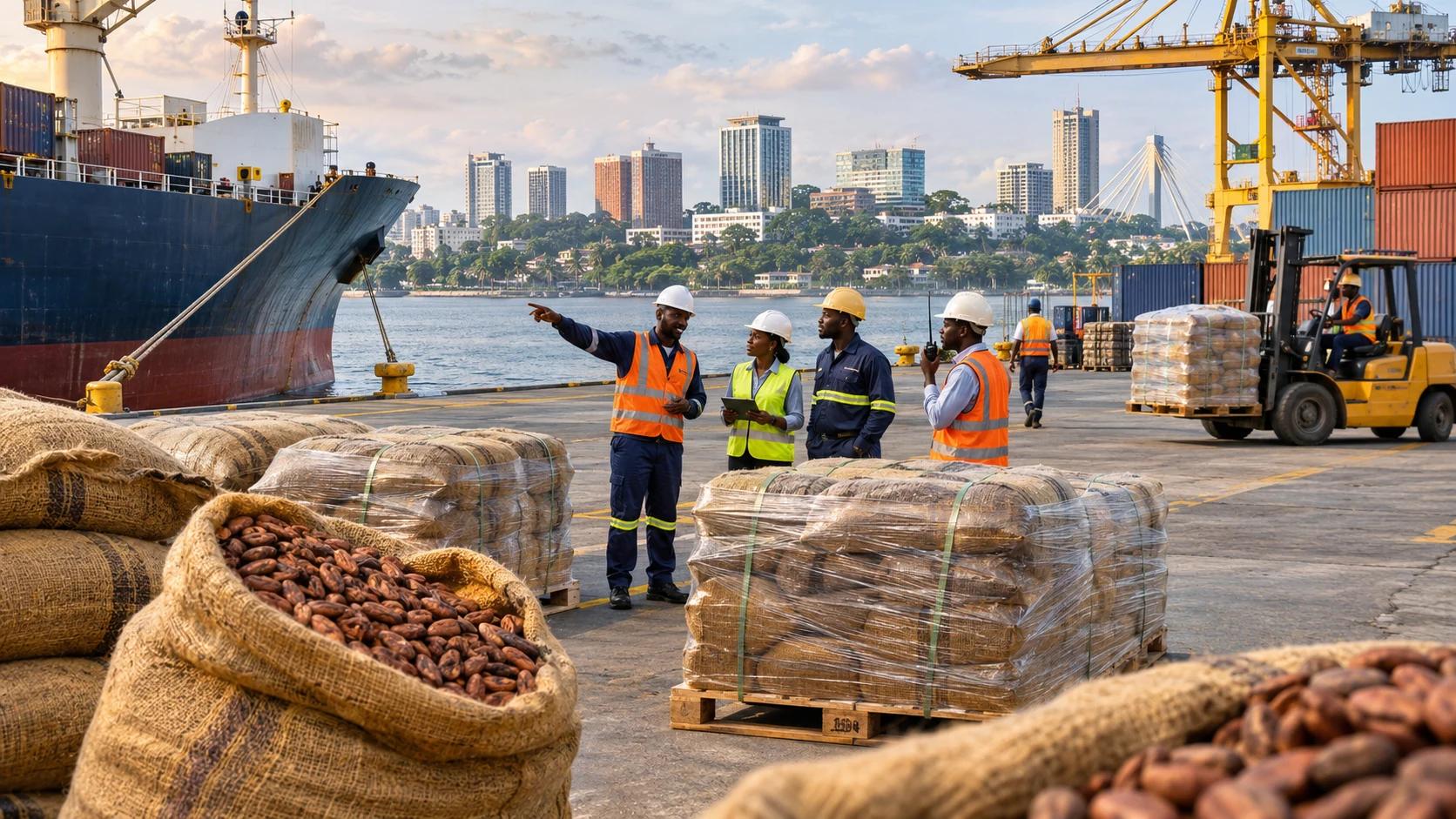
Côte d'Ivoire is where most companies entering Francophone West Africa start. Many regional offices sit in Abidjan, and its port connects to the landlocked states to the north.
A correction first. Some market studies say Côte d'Ivoire has an investment-grade credit rating. It does not. The Ivorian economy ministry's ratings page, updated in June 2026, lists S&P at BB with a stable outlook, affirmed on 14 November 2025, and Moody's at Ba2 with a stable outlook, affirmed on 13 March 2026. Both sit below investment grade; Moody's Ba2 is two notches below it. Recent upgrades, including Fitch's move to BB in December 2025, are a real signal of improving public finances. They do not mean the sovereign is rated alongside investment-grade borrowers, and they should not be priced as if it were.
Company formation runs through CEPICI, the investment promotion centre, which acts as a one-stop desk for registration. The Investment Code grants tax and customs incentives that depend on the size and location of the investment. Ask CEPICI or an Ivorian lawyer for the current thresholds in writing. Older guides quote figures that may no longer apply.
Sectors where entrants commonly look first:
- Cocoa and agricultural processing. Cocoa is regulated, so ask the national cocoa regulator how supply to processors is allocated before you plan capacity.
- Construction and building materials for a fast-growing Abidjan.
- Logistics tied to the port and the corridors to Burkina Faso and Mali. Check corridor security and the current border rules with the Sahel states before you sign a transit contract.
Senegal: a new government and first oil
On 24 March 2024 Bassirou Diomaye Faye won Senegal's presidential election with 54.28% of the vote and took office on 2 April. In June 2024 the Sangomar field, operated by Woodside Energy with the national oil company Petrosen, produced Senegal's first offshore oil. Oil and gas bring service and supply opportunities in engineering, logistics, catering and environmental work. Local content rules apply, so ask what share of your contract must go to Senegalese firms and staff.
Senegal's public finances are the main risk to price. The current government found that earlier administrations had under-reported public debt. The IMF suspended the $1.8 billion programme agreed in 2023, now puts the 2023 budget deficit at 12.3% of GDP against the 4.9% previously reported, and estimates total public-sector debt at about 132% of GDP at the end of 2024. Moody's has cut Senegal's rating to Caa2. In September 2026 IMF staff and the government reached agreement on a new $2.2 billion, 36-month programme, which still needed approval by the IMF's Executive Board, Africanews reported. Before you price any contract with a Senegalese public body or state-owned company, read the IMF's latest published statements on Senegal and ask your bank how it rates Senegalese public counterparties.
Dakar also has an active technology and services scene, with French-language services sold to clients in Europe. Investment incentives run through the national investment promotion agency. As in Côte d'Ivoire, ask for current thresholds in writing.
Language is a working requirement
Business in both countries runs in French. Registrations, regulatory filings, court proceedings and OHADA-governed contracts are in French. Negotiations are in French. An interpreter helps in the first meeting and slows every one after it.
The options are plain: hire French-speaking staff for market-facing roles, partner with a firm that brings the language alongside market access, or build French capability in-house. Most companies that last do some of each.
Language is also part of legibility. A Senegalese supplier's standing is written in French-language registry records, French-language tax filings and French-language court records. If your lawyers and lenders cannot read those documents, the supplier's track record is invisible to them, however solid it is. Budget for certified translation of the key documents on every deal.
Your next step
Choose one entry country, not the whole union. Ask a lawyer in that country for three things in writing: the current Investment Code thresholds for your planned investment, the OHADA company form that fits your structure, and an extract from the commercial register for your first intended partner, matched to the people you are negotiating with. Our comparison of market entry modes in Africa covers the OHADA rules on branches. For how AfroSynergy is meant to fit into that work, see the page for international companies.
AfroSynergy connects international buyers with African exporters. Listings open on 15 January 2027. To source a product or find a counterparty now, send us an enquiry.
Comments
Sign in to leave a comment. Comments are moderated.
Keep reading
Sourcing from Africa?
Listings open on 15 January 2027. Tell us what you need to source and we will come back to you.
Or get new guides by email.
By subscribing you agree to our Privacy Policy. Unsubscribe anytime.